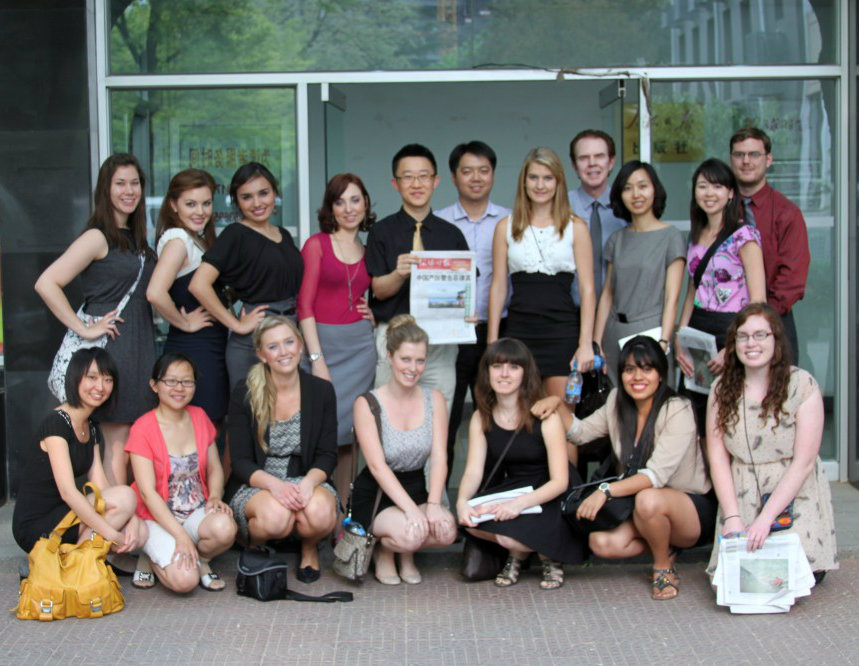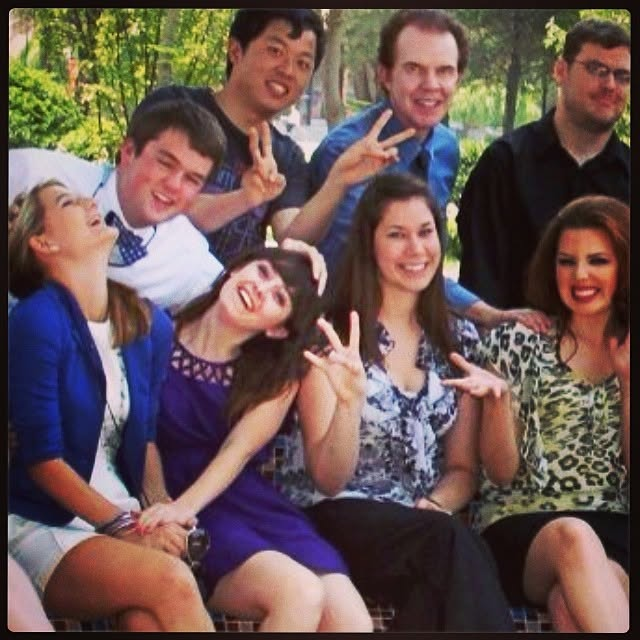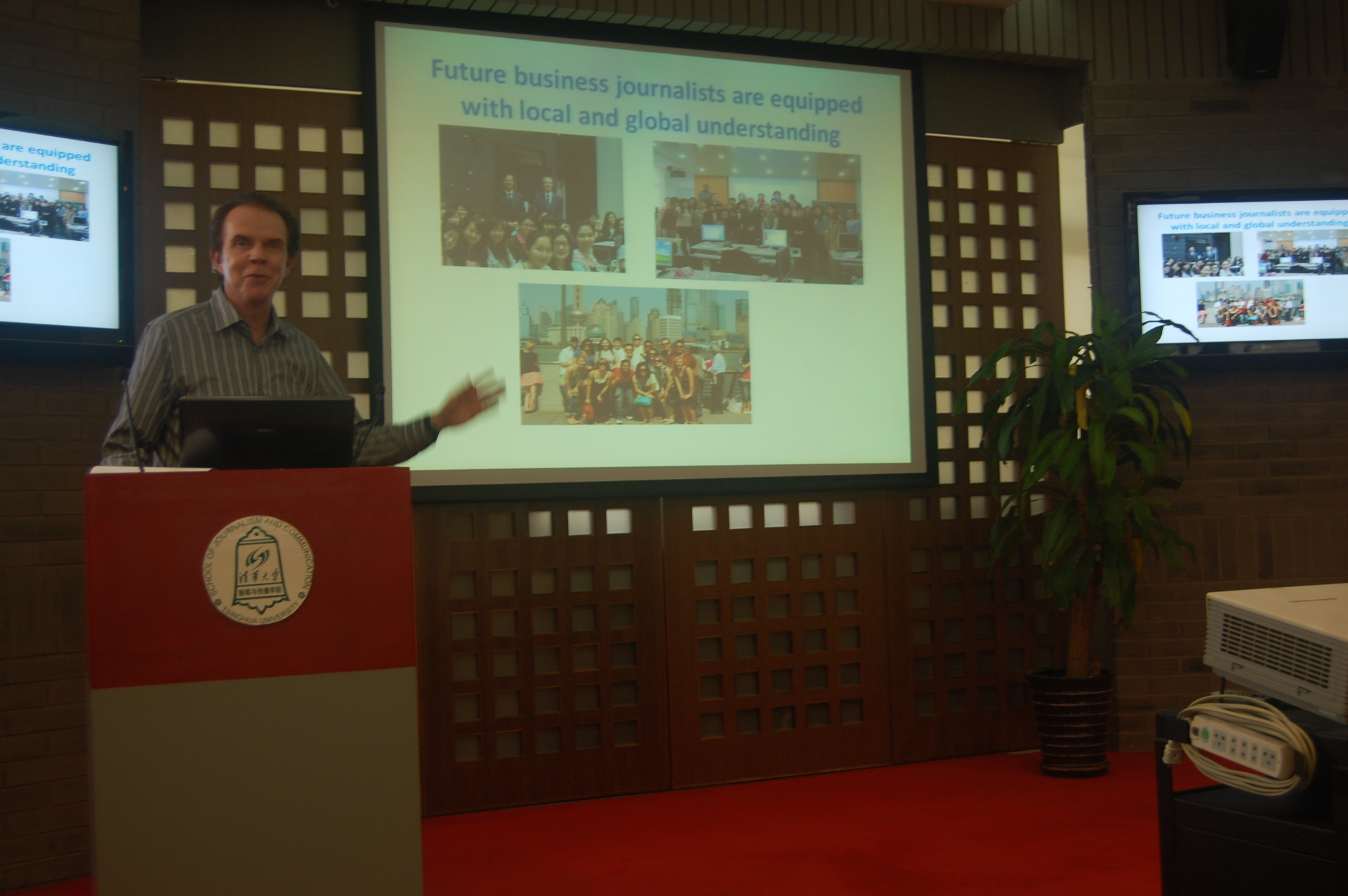
It seems fitting that the last time I saw Andrew Leckey in person was in China. He was a peripatetic business journalism professor, holding Fulbright fellowships in China, Uganda, and Taiwan. One of his classes at Arizona State University was itself a trip to Beijing and Shanghai, which helped me imagine a future doing journalism in China for the first time.
It feels like everyone who took his classes at ASU has a story about how they wouldn't be where they are today without him. I'm no different. But some of those stories seem more transformational than mine. By the time I was in Leckey's class, I was nearly a couple years removed from four years in the navy. (He would later describe me in a recommendation letter as having the "unflappable" personality of someone who's "been around." From him, I take that as a compliment.)
When I separated from the navy, I was leaving with a very specific vision for my future: I was going to study journalism and write about China. Having already envisioned the end goal, I didn't always appreciate the forces pushing me along the path to achieving it. It is clear, though, that the path I set out on would have been much more difficult without Leckey in my corner.
Leckey always went to bat for his students and would stay in touch with them for years after they graduated. He had a habit of latching onto one or two factoids about everyone in his orbit — partly as a memory device, I suspect. What better way to keep track of thousands of students? For me, that meant I was forever wedded in his mind to two pieces of trivia: I was a former sailor (and an expert knot tier, to hear him tell it) and a comic book lover, because of a story I wrote for his class on the aftermath of the bankruptcy of Phoenix's legendary Atomic Comics chain.
Leckey was responsible for helping me get internships at Reuters and the Phoenix Business Journal, opening up many doors for me in my career. It was also through the Reynolds Center for Business Journalism, which he headed at ASU, that I learned of the Hinrich Foundation scholarship that brought me back to Asia for my master's degree in Beijing.
A decade later, when he was spending much of his post-work life traveling, I reached out to ask for a recommendation for the Knight-Bagehot Fellowship at Columbia — a program he’d done himself and for which he'd served on the board. We hadn't spoken in person in years, but he was happy to set up a call to catch up on everything I’d been doing at the South China Morning Post.
I didn't wind up getting the fellowship, but I was so grateful that even in retirement he made time for former students.
The last message I received from him came in December, a simple check-in asking how I was doing. I let him know I had just taken a role at Bloomberg and would be moving to Singapore.
"Keep me posted!" he wrote back.
I'm incredibly saddened that I no longer can. Andrew Leckey passed away last month at 76. It's been heartening to see the flood of tributes from my former classmates and colleagues detailing how he impacted their lives. And that covers just a sliver of his decades-long career. He will certainly be missed.